
Category: SEO | Off-Page SEO | Link Building | AI Search
Published: June 18, 2026
Read time: 7 min
Site: TheTechCursor
The standard off-page SEO advice has stayed the same for years: build authority through digital PR, earn mentions, get high-authority links, and your visibility grows. Simple, right?
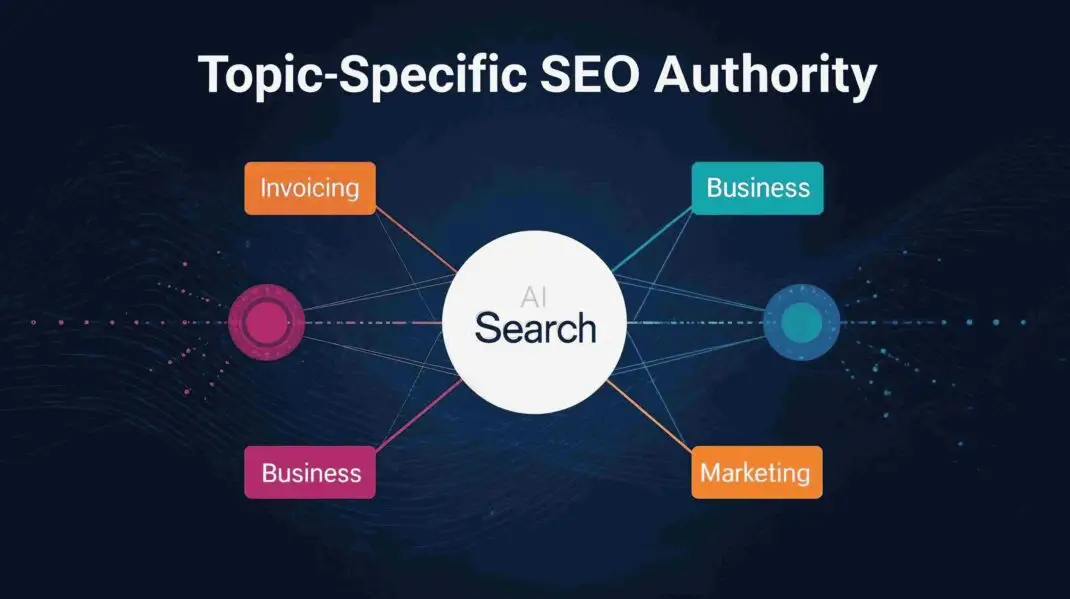
There is a problem with that approach in the AI search era. New research reveals that AI search engines do not rely on the same set of trusted sources for every topic. They rebuild which sources to trust depending on the specific subject of the question. This means generic, scattered off-page authority building is increasingly a waste of budget — and topic-specific authority is where the real results are happening.
Here is what the data shows and how to actually build authority where it counts.
AI Trusts Different Sources for Different Topics
This is the core finding that changes how off-page SEO should work. AI search engines do not maintain one universal list of trusted sources across every subject. Instead, they rebuild the trusted-source set specific to each topic being asked about.
The data illustrating this gap is striking. In questions about invoicing, competitor domains accounted for 33.5% of what AI systems cited as sources. In questions about starting a business, that same source type — competitor domains — accounted for only 7%. Same AI model, two different topics, and the type of source it reached for nearly flipped entirely.
This means a backlink strategy built around general domain authority misses the point. What actually matters is whether your links and mentions come from sources that carry authority specifically within your target topic.
Furthermore, this finding aligns with broader topic-based SEO thinking: you do not just want backlinks in general. You want links that carry authority in your specific topic area and with your specific audience — not generic high-authority sites unrelated to your niche.
Video, Social, and UGC Play by Different Rules
It is worth noting that video and social platforms operate on separate mechanics entirely. Across the data sample, these surfaces accounted for roughly 6.5% of citations — a meaningfully different pattern from traditional publishers and research sources.
YouTube remains something of an exception across AI models, consistently cited at notable rates regardless of topic. Reddit and other user-generated content platforms behave differently again, with their own distinct citation patterns. These deserve separate strategic treatment rather than being lumped into traditional digital PR efforts.
AI Trusts Entities It Already Recognizes
Here is the second critical insight: AI does not form a fresh opinion about your brand with every single query. Instead, it reuses trust that is already attached to the sources it pulls from — and it favours entities it already associates with authority on that specific topic.
This explains a phenomenon many SEOs have noticed: two brands with nearly identical on-page optimization can get cited by AI at very different rates. The difference often comes down to off-property reputation that the AI model already trusts, built through external mentions, publications, and recognized experts.
Your own blog or website is one input — but likely one of the weaker ones. The publications, analysts, industry experts, and communities that mention your brand carry significantly more weight in how AI evaluates your authority.
Named authorship appears to matter significantly. Content published under a real person’s byline appears to outperform the same content published anonymously under a brand name. While the dataset on this is still developing, early industry testing — including LinkedIn’s own analysis of AI visibility factors — found that fresh, expert-authored, clearly time-stamped content earned faster visibility and citation gains than equivalent brand-published content.
The underlying mechanism makes intuitive sense. A human author with an established track record — someone who has written on the topic elsewhere, maintains an active professional presence, or holds relevant credentials — gives the AI model an actual entity to attach authority to. A faceless brand post provides much less for the model to anchor that trust onto.
Authority Pays Out in Steps — Not Smoothly
This is perhaps the most actionable finding for budget allocation. More quality mentions generally should mean more citations. However, authority does not pay out evenly as you accumulate it — it pays out in steps.
Analysis of domain authority data found that Authority Score was the single strongest predictor of AI mentions among backlink-related factors studied — stronger even than raw link count. Critically, the relationship is not linear. The citation curve bends rather than climbing in a straight line.
What this means practically: a little additional third-party authority in a crowded middle tier of sources will probably not meaningfully change how often AI cites you. The factor that actually moves citation rates is breaking into the top tier of authoritative sources, specifically within your topic.
Read alongside the topic-specific finding above, the strategic implication is clear: depth in your topic’s top-tier sources beats spread across many lower-tier sources. Three placements in a genuinely top-decile source for your topic will move your AI visibility more than a dozen placements scattered across low-authority sites.
How to Build Authority Where AI Actually Looks
Based on these findings, here is a practical, prioritized approach to building topic-specific authority.
1. Identify 2-3 Subject Matter Experts
These do not need to be founders or existing public figures. What they need is credibility in your specific topic, deep understanding of your brand and product, and genuine willingness to publish consistently.
Give them a clear process — and explicit permission — to develop sharp, opinionated content tailored to specific audience personas. Format matters here: how-to guides and roundup-style content together account for the majority of citation-worthy source formats in current data. Build your experts’ content in these proven shapes.
2. Map the Sources AI Already Cites for Your Topic
Run your highest-intent target prompts through AI search engines and an audience research tool, recording exactly which domains, social accounts, and named authors appear as sources. Look for overlap and patterns in who consistently gets cited for your topic.
Then target the people, not just the publications. Getting your expert quoted by the same journalist, featured on the same webinar series, or co-authoring with an author the model already trusts pulls you into the candidate set far faster than a standalone, unconnected piece of content.
3. Concentrate Your Budget on the Top Authority Tier
Given that authority pays out in steps, rank your target outreach list by authority specifically within your topic, and spend your budget there first. A handful of placements in genuinely top-tier, topic-relevant sources outperform a scattered, broad outreach campaign every time.
4. Do Not Overlook Nofollow Links
This finding surprises many SEO professionals: nofollow links carry almost the same weight as followed links when it comes to AI citation patterns, according to the underlying research. Nofollow opportunities are typically easier to earn — build a target list of nofollow-heavy publications in your category and pitch them deliberately rather than skipping them.
5. Publish Embeddable Data Under Your Expert’s Name
Original charts, infographics, and data visualizations bylined to your subject matter expert — and made easily embeddable by other sites — can earn citations across dozens of pages you never directly pitched. AI search systems lean heavily on answer-ready, structured content formats like this.
6. Use LinkedIn as a Fast Lane
Named-author content on LinkedIn appears to get indexed and surfaced by AI systems relatively quickly. Industry reports describe brands appearing in AI answers within weeks — sometimes days — of consistent publishing under a real person rather than a faceless brand page. Partnering with established experts and voices already recognized in your topic area is a practical way to accelerate this.
What This Means for Your Off-Page SEO Strategy
If you currently run a generic link-building or digital PR strategy, this research suggests a clear pivot point. Rather than asking “how do we get more high-authority links,” the better question is “which sources does AI already trust for our specific topic, and how do we earn placement among them?”
This shifts off-page SEO from a volume game into a precision game. Identifying the actual trusted source set for each of your core topics, then concentrating outreach and relationship-building specifically within that set, will outperform broad, scattered authority-building efforts that do not account for topic-specific trust patterns.
For agencies managing client SEO and link-building programs, this also changes how success should be measured and reported. Generic domain authority metrics matter less than tracking placement within the specific top-tier sources that AI cites for each client’s core topics.
Bottom Line
Off-page SEO is not becoming less important in the AI search era — it is becoming more precise. AI search engines build distinct, topic-specific trust networks, and your authority-building efforts need to target those exact networks rather than generic high-authority domains.
The brands and agencies that adapt their digital PR and link-building strategies to this topic-specific reality will see meaningfully better AI visibility than those still chasing broad authority metrics that no longer map cleanly to how AI search actually evaluates trust.