Category: Google Ads | Digital Marketing | GML 2026
Read time: 6 min
Google’s VP/GM of Ads & Commerce, Vidhya Srinivasan, took the stage at Google Marketing Live 2026 and delivered a message that every marketer needs to hear: the Search playbook has officially changed.
In the age of AI, the best ads must be answers.
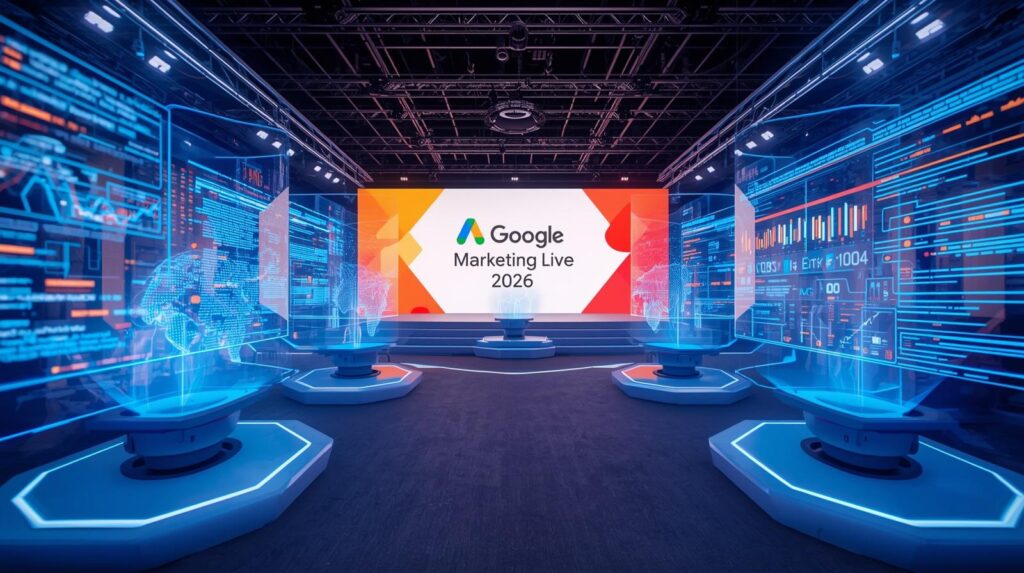
GML 2026 was not a minor update announcement. It was a fundamental reimagining of how Google Ads works — shifting from traditional keyword-based placements toward intelligent, conversational, AI-powered ad experiences that meet users exactly at the moment they are ready to act.
Here is a complete breakdown of every major announcement and what it means for your campaigns.
The Big Shift: From Ads to Answers
For over two decades, Google Ads worked on a simple premise: a user types a keyword, and Google shows a relevant ad. That model is being replaced.
With AI Mode, AI Overviews, and conversational Search now mainstream, users no longer just type keywords — they have full conversations with Google. They ask complex questions. They research, compare, and decide — all within a single Search session.
Google’s new ad formats are built for exactly this reality. Instead of interrupting a user’s journey, these formats are designed to be part of the answer — helpful, contextual, and non-disruptive.
The 4 Major Announcements
1. Direct Offers — Context-Aware Incentives Inside AI Conversations
What it is: Direct Offers is a brand-new ad format that delivers exclusive, context-aware incentives directly inside AI conversations on Google Search.
What this means: When a user is in an AI Mode conversation researching a product or service, Direct Offers can surface a relevant discount, promotion, or exclusive deal at precisely the right moment — when the user is already engaged and considering a purchase.
This is a major shift from traditional offer-based advertising. Instead of showing a generic promotional ad, Direct Offers delivers incentives that are contextually matched to what the user is actually discussing — making them far more relevant and far more likely to convert.
Who benefits most: E-commerce brands, subscription services, and any business that uses promotional offers as part of their conversion strategy.
2. AI-Powered Shopping Ads — A Complete Retail Upgrade
What it is: Google called this a complete “glow-up” for retail advertising. AI-powered Shopping ads now blend brand recommendations naturally with organic results and connect users to real-time inventory.
Three new capabilities power this upgrade:
- Intelligent Product Identification — AI surfaces the most relevant products for each individual shopper’s search, based on deep intent understanding rather than just keyword matching
- Expert Feature Summaries — Technical specs are automatically translated into simple, shopper-friendly language. A “16GB RAM, Intel i7” becomes “fast performance for multitasking” — language buyers actually understand
- Immediate Decision Confidence — The AI provides the “why” behind each recommendation, giving shoppers a clear reason to choose your product right at the moment of decision
These features are rolling out via Performance Max and AI Max for Shopping campaigns.
Who benefits most: Any retailer with a Google Merchant Center feed — from small e-commerce stores to large retail chains.
3. Business Agent for Leads — Agentic Ads That Pre-Fill Information
What it is: Business Agent for Leads is one of the most forward-looking announcements from GML 2026. These are agentic ads — meaning AI-powered ads that can take actions on behalf of users, not just show them information.
What this means: When a user expresses interest in a product or service, the Business Agent can automatically pre-fill lead information — reducing the friction between interest and conversion dramatically. Instead of a user having to fill out a contact form manually, the agent handles it, delivering highly qualified, pre-verified leads directly to the advertiser.
This is part of Google’s broader push toward agentic experiences — where AI acts as an intermediary between user intent and business action.
Who benefits most: Lead generation businesses — real estate, finance, insurance, B2B services, education, and any industry where lead quality and volume are critical metrics.
4. New Ad Formats in AI Mode — Native Conversational Placements
What it is: Google has introduced entirely new ad formats designed specifically for AI Mode — Google’s conversational search experience. These placements sit natively within AI-generated conversational answers, offering a helpful, non-disruptive experience.
What this means: As more users shift their searching behaviour toward AI Mode — asking multi-part questions and having back-and-forth conversations with Google — traditional ad placements become less visible. These new formats ensure that advertiser messages remain present and relevant even within fully conversational Search sessions.
The key design principle: these ads feel like part of the answer, not an interruption to it.
Who benefits most: Brands in high-consideration categories where users research extensively — travel, technology, home improvement, financial products, and more.
What “AI-Ready” Actually Means for Marketers
Google’s message at GML 2026 was clear: to succeed with these new formats, your brand needs to be AI-ready. But what does that actually mean in practice?
1. Your content must be the best answer AI systems surface content that genuinely resolves a user’s query. Vague, generic ad copy will not perform. Your ads need to be specific, helpful, and directly responsive to real user questions.
2. Your product data must be complete and accurate. AI-powered Shopping ads, Direct Offers, and Business Agent all rely on structured data — your Merchant Center feed, your product descriptions, your pricing. The better your data, the better the AI can represent your brand.
3. Embrace automation with strategic guardrails. Performance Max and AI Max are becoming the primary campaign structures for this new era. Successful marketers are not abandoning control — they are providing strong creative inputs, clear business objectives, and quality data signals, then letting Google’s AI optimize from there.
4. Think conversations, not keywords. With query fan-out and AI Mode, a single user intent can generate dozens of related searches. Optimizing for a narrow keyword list is no longer sufficient. Focus on covering topics comprehensively and answering the real questions your customers have.
The Bottom Line
Google Marketing Live 2026 made it official: the era of keyword-based, static ad formats is giving way to something fundamentally more intelligent. The four major announcements — Direct Offers, AI-powered Shopping ads, Business Agent for Leads, and new AI Mode ad formats — collectively represent a new advertising paradigm.
The brands that will win in this environment are not necessarily those with the biggest budgets. They are the brands that understand the shift, invest in high-quality data and creative, and position themselves to be the best answer — not just another ad.
The Search playbook has changed. The question is: does your strategy?
Stay updated with the latest in Google Ads, AI, and digital marketing — Reviewed & published by TheTechCursor Editorial Team.