Category: Nvidia | AI Infrastructure | Tech News
Read time: 6 min
Nvidia CEO Jensen Huang did not just visit South Korea for business meetings. He ate fried chicken with the country’s top corporate leaders, met a famous eSports gamer, watched a local baseball game — and threw the opening pitch. But behind the casual optics, Huang was busy sealing three of the most significant AI infrastructure deals of 2026.
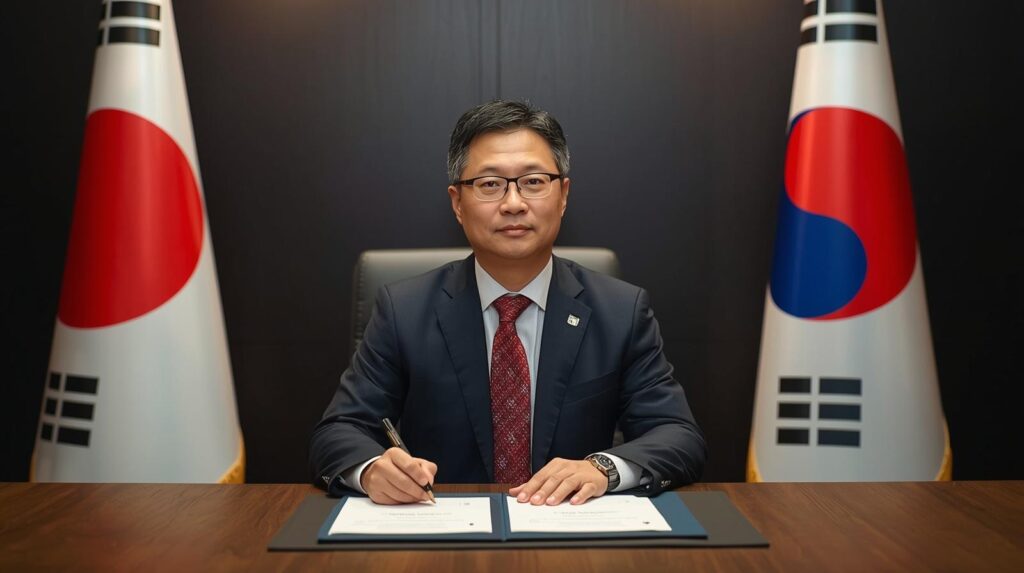
On June 7, 2026, Nvidia announced major new partnerships with SK hynix, Naver, and Doosan — three of South Korea’s most powerful companies. Together, these deals represent a significant expansion of Nvidia’s global AI infrastructure footprint and a major vote of confidence in South Korea as a central player in the AI-powered industrial revolution.
Why South Korea? Why Now?
South Korea is not a random choice. It is one of the world’s most important technology manufacturing powerhouses — home to massive chip, electronics, automotive, and shipbuilding industries.
Most critically for AI, South Korea is where two of the world’s three largest memory chip makers are based: SK hynix and Samsung Electronics. Memory chips are not a side component in AI data centers — they are at the absolute core of AI performance. Every large language model, every AI training run, every inference request depends on fast, high-capacity memory.
For Nvidia — whose GPUs power the vast majority of the world’s AI infrastructure — securing a stable, long-term supply of next-generation memory from South Korea is strategically essential.
Jensen Huang put it plainly: “A sustainable supply of memory is essential for building AI factories that will power the new AI-led industrial revolution. Advanced memory is at the core of their performance.”
Deal 1: SK hynix — Next-Generation Memory for AI Factories
The biggest and most strategically significant deal of the visit is Nvidia’s multiyear technology partnership with SK hynix, one of the world’s leading memory chip manufacturers.
What the deal covers:
- Next-generation memory development — SK hynix and Nvidia will jointly develop the next generation of memory chips specifically designed for massive AI data centers
- Stable supply guarantee — SK hynix commits to ensuring a reliable supply of advanced memory for the global AI industry — directly addressing one of the biggest bottlenecks in AI infrastructure scaling
- Expansion into personal AI and physical AI — Beyond data centers, SK hynix will work to expand its presence into personal AI devices and physical AI (the term used for intelligent, autonomous robots and vehicles)
- Simulation technology collaboration — SK hynix will use Nvidia’s CUDA-X library and PhysicsNeMo framework to improve the speed and efficiency of its chip development simulations, including technology computer-aided design and computational lithography
The SK Telecom angle: SK hynix’s sister company, SK Telecom, will build a new gigawatt-scale AI cloud in South Korea powered by Nvidia’s chips and infrastructure. The first AI data center in this cloud is scheduled to come online early next year — making this deal not just about chips, but about entire AI infrastructure ecosystems.
Deal 2: Naver — Gigawatt-Scale AI Factories
South Korea’s dominant internet company Naver — often described as the Google of South Korea — is Nvidia’s second major partner from the trip.
What the deal covers:
The collaboration begins at Naver’s existing data center in Gak Sejong, where AI infrastructure is already operational. The two companies will work to expand the capacity of that facility significantly — and then go further, building additional gigawatt-scale AI factories together.
The timeline and exact scale depend on Naver’s future capacity procurement and power supply availability — a reminder that energy infrastructure is now one of the primary constraints on AI expansion globally.
For Naver, this partnership is about ensuring it has the computing power to compete in an AI-first internet era. For Nvidia, it adds another major anchor customer to its growing network of AI infrastructure deployments across Asia.
Deal 3: Doosan — Physical AI and Intelligent Robotics
The third partnership — with the multinational conglomerate Doosan Group — points toward one of the most important frontiers in AI: physical AI.
What the deal covers:
Doosan sits at an interesting intersection with Nvidia. The company is already a supplier — it makes components for Nvidia’s graphics processing units. But the new partnership goes far beyond the existing supplier relationship:
- Energy solutions — Nvidia plans to use Doosan’s energy solutions in its data center platforms, addressing the massive power demands of AI infrastructure
- Physical AI for robotics — Doosan will use Nvidia’s physical AI technology to power its intelligent robotics development — bringing Nvidia’s AI capabilities into autonomous machines and industrial robots
Physical AI — the application of AI to robots, autonomous vehicles, and intelligent machines — is widely considered the next major wave of AI deployment. Doosan’s involvement in both robotics and energy infrastructure makes it a uniquely valuable partner for Nvidia’s long-term vision.
What Are “AI Factories” — And Why Does It Matter?
Jensen Huang used a term throughout this visit that is worth understanding: AI factories.
An AI factory is not a traditional data center. It is a purpose-built facility designed to continuously produce AI — training models, running inference, processing data at massive scale. Just as physical factories produce goods, AI factories produce intelligence.
Huang’s vision is that AI factories will become the foundational infrastructure of a new industrial revolution — as essential to the global economy as electricity grids or internet networks. Every deal he signed in South Korea is a building block in that vision.
The gigawatt-scale data centers being planned with SK Telecom and Naver are not just server farms — they are AI factories designed to run continuously at enormous scale.

The Bigger Picture: Nvidia’s Global AI Infrastructure Push
South Korea is one part of a much larger pattern. Nvidia has been aggressively expanding its AI infrastructure partnerships across Asia, the Middle East, and Europe in 2026 — signing deals with governments, telecoms, and tech companies to build out the physical computing layer that the AI revolution requires.
The South Korean deals are significant because they address three critical pillars simultaneously:
- Memory supply (SK hynix) — the hardware foundation of AI performance
- Cloud infrastructure (Naver + SK Telecom) — the computing layer where AI runs
- Physical AI and energy (Doosan) — the industrial and power layer that enables AI at scale
Together, they represent a comprehensive AI infrastructure strategy for one of the world’s most technologically advanced nations.
Bottom Line
Jensen Huang’s visit to South Korea was never just about fried chicken and baseball. It was about securing Nvidia’s position at the center of the global AI infrastructure buildout — from the memory chips inside AI servers to the gigawatt data centers that run them to the intelligent robots that physical AI will power.
For anyone following the AI industry, these three deals are a clear signal: the race to build global AI infrastructure is accelerating, South Korea is a key battleground, and Nvidia is moving fast to lock in its position as the indispensable partner.
The AI factories are being built. The question is who will power them — and who will benefit.
Stay updated with the latest in AI, technology, and digital innovation. Reviewed & published by TheTechCursor Editorial Team.
Pingback: Google I/O 2026: Welcome to the Agentic Gemini Era — Everything Announced and What It Means for You - The Tech Cursor